Инженеры из Северо-Западного университета (Northwestern University) впервые создали искусственные нейроны, которые не только имитируют, но и могут взаимодействовать с живыми клетками мозга. Эти нейроны генерируют электрические сигналы, по форме и временным характеристикам идентичные биологическим, что открывает перспективы для разработки интерфейсов «человек—компьютер» и нейроморфных компьютеров.
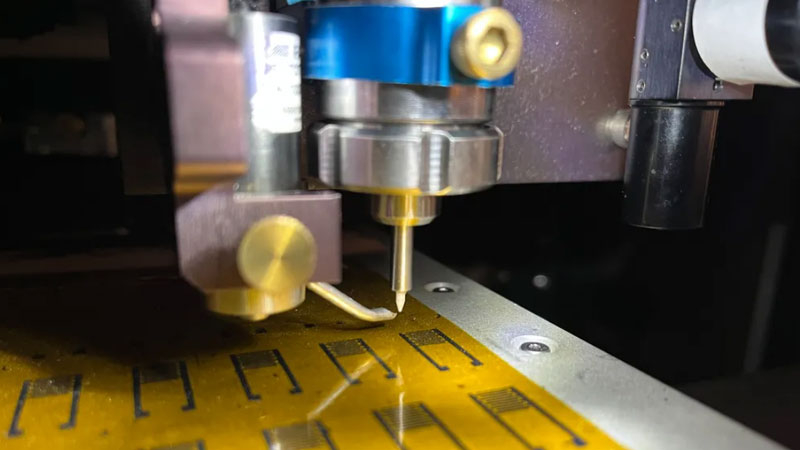
Основой технологии стали чернила, содержащие наночешуйки дисульфида молибдена и графена. С их помощью на гибкую полимерную подложку методом струйного напыления наносился рисунок, после чего подложка подвергалась электрическому току для частичного разложения. В процессе сохранялась часть полимерного материала, что приводило к образованию тонких проводящих путей. Эти элементы могли влиять на форму и силу тока, что совпадало со спектром нейронной активности.
Эксперименты подтвердили, что искусственные нейроны могут взаимодействовать с живыми клетками: при подключении к тканям мозжечка мыши они вызывали реакцию, аналогичную реакции собственных нейронов. Это стало первой демонстрацией, что напечатанные нейроны могут генерировать сигналы правильной формы и в нужном временном диапазоне.
Разработка открывает путь к созданию интерфейсов «мозг—компьютер» следующего поколения, а также нейропротезов для восстановления слуха, зрения и движений. Кроме того, если нейроморфные вычисления смогут достичь энергоэффективности мозга, это позволит создавать вычислительные системы, требующие значительно меньше ресурсов по сравнению с традиционными компьютерами.
Engineers from Northwestern University have successfully created artificial neurons that can not only imitate but also directly interact with living brain cells. These neurons generate electrical signals that are identical in shape and timing to biological ones, paving the way for the development of human-computer interfaces and neuromorphic computers that mimic brain functions.
The technology is based on inks made from nanosheets of molybdenum disulfide and graphene. Using these materials, a pattern was printed onto a flexible polymer substrate through inkjet deposition, followed by exposure to an electric current to partially decompose the substrate. This process preserved some of the binding polymer material, leading to the formation of thin conductive pathways. These printed elements could directly influence the shape and strength of the current flowing through them, aligning with the spectrum of neuronal activity.
Experiments confirmed that the artificial neurons could interact with living cells: when connected to mouse cerebellum tissue, they elicited responses similar to those of native neurons. This marked the first demonstration that printed neurons can generate signals of the correct shape and in the appropriate temporal range.
This development paves the way for next-generation brain-computer interfaces and neuroprosthetics aimed at restoring hearing, vision, and movement. Furthermore, if neuromorphic computing achieves the energy efficiency of the brain, it could lead to computational systems that require significantly fewer resources compared to classical computers.