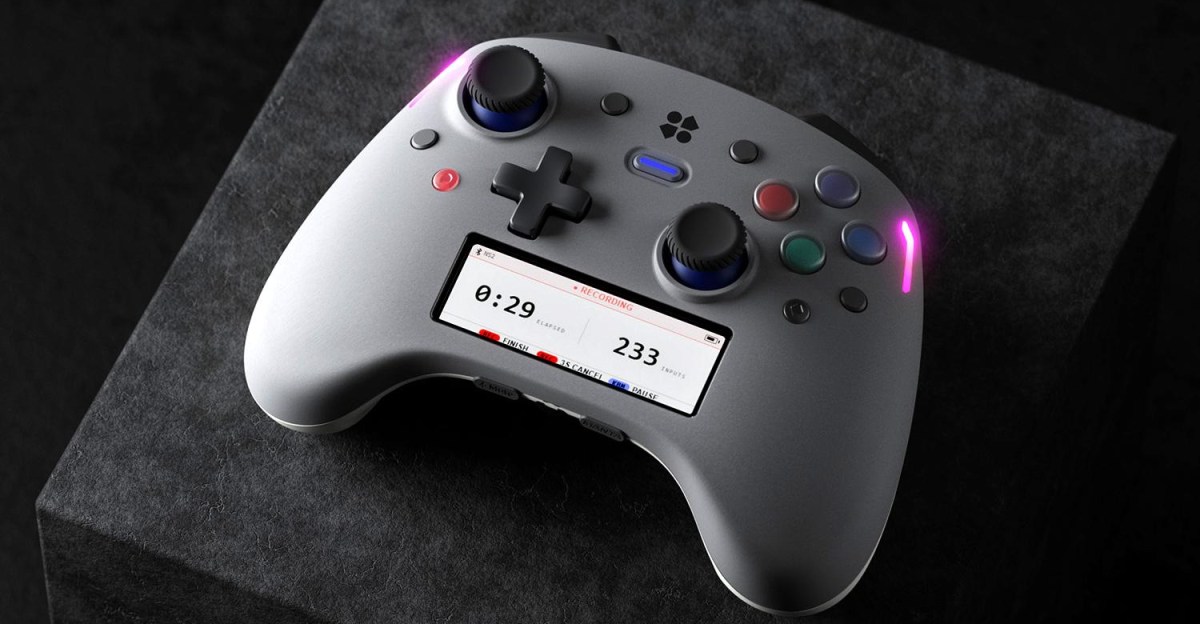
Компания Genki, после сотрудничества с 8BitDo два года назад, представила контроллер Manta, который стал первым продуктом, разработанным с нуля. Уникальный дизайн включает в себя расположение джойстиков и кнопок над большим 2,9-дюймовым ЖК-экраном, что делает его более массивным по сравнению с конкурентами. Manta предлагает широкие возможности настройки, позволяя игрокам адаптировать функциональность под свои предпочтения.
Контроллер Manta запускается сегодня на платформе Kickstarter, где акцент сделан на индивидуализации управления и удобства для различных игр. Первые спонсоры могут сделать предзаказ со скидкой до 189 долларов, в то время как полная розничная цена составит 279 долларов. Это уже девятое устройство компании, финансируемое через краудфандинг, и у Genki есть положительный опыт в успешной реализации подобных проектов.
Хотя на рынке уже есть контроллеры с встроенными экранами, Manta выделяется благодаря глубокой настройке через интерфейс, основанный на микроконтроллере Raspberry Pi RP2350. Игроки могут настраивать профили для различных консолей и игр, регулировать реакцию джойстиков, настраивать мертвые зоны, а также создавать пользовательские макросы, комбинируя несколько нажатий кнопок.
Manta также представляет собой один из первых контроллеров с так называемыми «трехступенчатыми триггерами». В отличие от других моделей, предлагающих два режима, Manta добавляет третий, оптимизированный для частых нажатий. Лицевая панель контроллера включает аналоговые кнопки, чувствительность которых можно настроить в зависимости от предпочтений игрока.
Среди других функций Manta можно выделить линейные магнитные двигатели для тактильной обратной связи, устойчивые к дрейфу джойстики с регулируемым натяжением, заменяемую батарею емкостью 2600 мАч и дополнительные кнопки на спине и плечах, которые также можно переназначать. Контроллер поддерживает беспроводное соединение через Bluetooth, а для минимизации задержек можно использовать прилагаемый 2,4 ГГц адаптер или подключить его напрямую к консоли через USB-C кабель.
Genki has introduced the Manta, its first controller designed entirely in-house, following a collaboration with 8BitDo two years ago. This controller features a distinctive layout with thumbsticks and buttons positioned above a large 2.9-inch LCD screen, making it bulkier than competing models. The Manta emphasizes customizability, allowing players to tailor its functionality to their preferences.
Launching today on Kickstarter, the Manta focuses on personalizing the controller's functionality and feel for various games. Early backers can preorder the controller for $189, while the expected retail price will be $279. This marks Genki's ninth crowdfunded device, and the company has a strong track record of successfully delivering products through this method.
While some companies already offer controllers with integrated screens, the Manta stands out with its deep customization options via a settings interface powered by a Raspberry Pi RP2350 microcontroller. Players can configure and switch between multiple console, game, and user profiles, adjust thumbstick responses and dead zones, and create custom macros by recording and combining button presses.
The Manta is also one of the first controllers to feature what Genki calls “tristage triggers.” Unlike many high-end controllers that offer two switchable trigger modes, the Manta adds a third option optimized for rapid repeated presses. Its face buttons are analog, allowing users to set the exact depth of travel required for a press to be detected, enhancing sensitivity control.
Additional features include linear magnetic ram motors in the grips for haptic feedback, drift-resistant TMR thumbsticks with adjustable tension, a user-replaceable 2,600mAh battery, and six additional remappable buttons on the back and shoulders. The Manta even has a dedicated button for switching to keyboard and mouse mode, enabling web browsing without needing to reach for another device. It supports wireless connectivity via Bluetooth, but for those concerned about latency, it can also connect using an included 2.4GHz dongle or directly to a console via a USB-C cable.