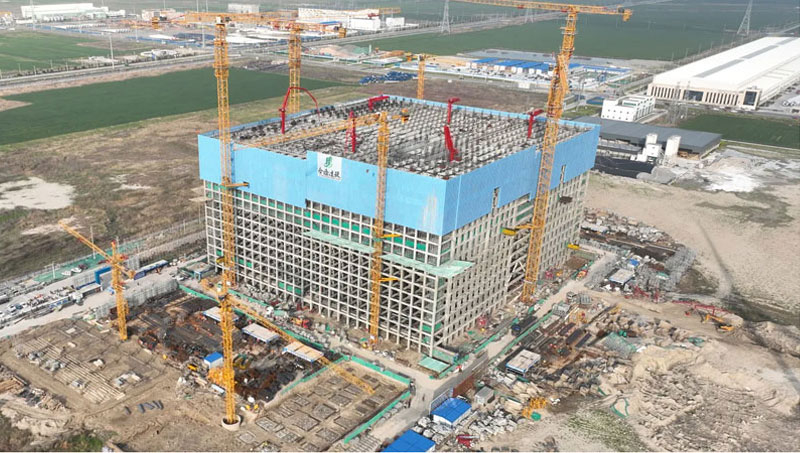
Южноафриканская государственная энергокомпания Eskom объявила о начале одного из самых необычных энергетических проектов последних лет — строительстве промышленной гравитационной системы накопления энергии совместно с американо-швейцарской компанией Energy Vault. Солнечные электростанции будут использоваться для подъема 30-тонных блоков на высоту, а затем их опускания для возвращения энергии в сеть.
Строительство объекта запланировано на месте старой угольной электростанции Hendrina в провинции Мпумаланга. Этот проект станет частью программы модернизации энергосистемы страны, которая сталкивается с регулярными перебоями в электроснабжении и нуждается в масштабных накопителях для балансировки растущей доли солнечной и ветровой генерации.
Первая установка будет иметь мощность 25 МВт и ёмкость хранения энергии 100 МВт·ч, что обеспечит около четырёх часов автономной работы на полной мощности. Система будет основана на платформе EVx 2.0 GESS, использующей принцип преобразования электрической энергии в потенциальную. Подъёмные механизмы поднимают массивные композитные блоки, которые при необходимости опускаются, вращая генераторы и возвращая электричество в сеть. В отличие от гидроаккумулирующих станций, данная технология не требует больших объёмов воды и может использовать отходы, включая уголь, для создания грузовых блоков.
Соглашение также предусматривает возможность развертывания до 4 ГВт·ч накопителей в странах Южноафриканского сообщества развития (SADC), включая Зимбабве, Мозамбик, Анголу и другие. Проект включает локализацию части производства, передачу технологий и обучение персонала Eskom.
Для Южноафриканской Республики данный проект имеет стратегическое значение, так как страна по-прежнему зависит от угольной генерации и регулярно испытывает дефицит мощности. Гравитационные накопители могут аккумулировать избыточную энергию в часы низкого спроса и быстро возвращать её в сеть в периоды пиковых нагрузок. Если пилотная установка подтвердит свои характеристики, технология может стать важной альтернативой литий-ионным батареям для крупных сетевых объектов и ускорить переход региона к более устойчивой модели энергоснабжения.
На данный момент аналогичный проект Energy Vault полностью реализован только в Китае, где гравитационный аккумулятор был подключён к энергосети в августе 2024 года. В том же году в США, в Техасе, началось строительство другого гравитационного аккумулятора, однако его статус остаётся неясным.
The South African state-owned energy company Eskom has announced the initiation of one of the most innovative energy projects in recent years—constructing an industrial gravity energy storage system in partnership with the American-Swiss company Energy Vault. Solar power will be utilized to lift 30-ton blocks to a height, which will then be lowered to return energy to the grid.
The facility will be built at the site of the old Hendrina coal power station in the Mpumalanga province. This project is set to be part of a modernization program for the country's energy system, which faces chronic power outages and requires large-scale storage to balance the increasing share of solar and wind energy generation.
The first installation will have a capacity of 25 MW and an energy storage capacity of 100 MWh, providing approximately four hours of autonomous output at full power. The system will be constructed on the EVx 2.0 GESS (Gravity Energy Storage System) platform, which operates on the principle of converting electrical energy into potential energy. Special lifting mechanisms will raise massive composite blocks to the height of the tower structure, and when needed, these blocks will be lowered to rotate generators and return electricity to the network. Unlike pumped storage stations, this technology does not require large volumes of water and can utilize industrial waste, including coal, to create the load blocks.
Additionally, the agreement allows for the deployment of up to 4 GWh of storage in the Southern African Development Community (SADC) countries, which include Zimbabwe, Mozambique, Angola, and others. The engineering concept also involves localization of part of the production, technology transfer, and training of Eskom personnel.
This project is of strategic importance for the Republic of South Africa, which remains dependent on coal-fired generation and frequently experiences power shortages. Gravity storage devices can accumulate excess energy from solar and wind stations during low demand periods and quickly return it to the grid during peak loads. If the pilot installation confirms its design characteristics, the technology could become a significant alternative to lithium-ion batteries for large grid facilities and accelerate the region's transition to a more sustainable energy supply model.
Currently, it appears that a similar Energy Vault project has only been fully implemented in China, where a gravity battery was connected to the power grid in August 2024. In the same year, construction of a gravitational battery began in Texas, USA, but its status remains unclear.